

How to Build Authority as a Consultant Online (Even If You're Starting From Zero)

When starting as a consultant, your biggest challenge isn’t expertise - it’s being seen. Without a strong online presence, even top-tier skills go unnoticed. Building authority online allows clients to find and trust you, positioning you as a go-to expert. Here’s how you can do it, step by step:
- Pick a Specific Niche: Specialization makes you stand out. Define your audience, their problem, and the results you deliver. Example: Instead of “helping businesses grow,” focus on “reducing churn for SaaS startups by 30%.”
- Create a Professional Website: Your site should clearly state who you help, how, and the outcomes you deliver. Include case studies, a blog, and a clear call-to-action like scheduling a consultation.
- Share Valuable Content: Publish guides, case studies, and insights that solve client problems. Regular posts on LinkedIn and a consistent schedule build trust over time.
- Leverage LinkedIn: Optimize your profile with a clear headline and engaging About section. Post 3–5 times a week, engage with others’ content, and join niche groups to expand your reach.
- Speak and Network: Secure speaking opportunities at industry events or webinars to showcase your expertise. These events build trust faster than online content alone.
- Use Tools to Save Time: Automate tasks like content scheduling and lead qualification to focus on high-value activities.
- Track Progress and Adjust: Measure metrics like profile views, engagement, and lead quality. Refine your strategy based on what works.
Key takeaway: Consistency is critical. It takes 3–6 months to see results, but with regular effort, your authority grows, attracting clients who already trust your expertise.

7-Step Framework for Building Consultant Authority Online
The CORRECT Way to Build Authority Online (for non-famous people only)
sbb-itb-f7e72a6
Step 1: Choose Your Niche and Define Your Target Audience
Deciding who you serve and what problem you solve is the foundation of your consulting strategy. A broad or vague niche leads to unclear messaging and lackluster results. On the other hand, a well-defined niche makes you the go-to expert in your field. It clarifies your message and boosts your authority by highlighting your specialized expertise.
Why Specialization Beats Being a Generalist
Generalists often struggle to stand out because they offer broad solutions that can feel interchangeable. Specialists, however, immediately grab attention. For example, narrowing your focus to something like "helping B2B SaaS companies reduce customer churn in their first year" makes you memorable. Simi Arora, Founder of BrandScale, captures this perfectly:
"The riches are in the niches" [8].
The numbers back this up. Specialized consultants close 40% more deals at higher rates compared to generalists [9]. Why? Specificity signals expertise. When a prospect sees your profile and thinks, "This person understands my exact problem", you’ve already established trust. In fact, 68% of people view niche experts as more credible than generalists, according to a 2025 Edelman trust survey [11].
Specialization also plays well with technology. AI-driven discovery systems increasingly reward clear expertise. Websites with strong topical authority, for example, grow traffic 57% faster [8].
To define your niche, focus on three key factors: your proven skills (what you’ve successfully done), a clear market need (problems worth paying to solve), and your genuine interest (to keep you motivated) [11][4]. This combination, often called the "Ownable Idea" intersection, is the secret to long-term success.
Here’s an example of a well-defined niche:
| Ingredient | Description | Example |
|---|---|---|
| Specific Audience | A narrow, identifiable group. | Boutique law firms with 10-20 employees. |
| High-Value Problem | An urgent or costly challenge. | Inefficient client intake. |
| Clear Outcome | A measurable, tangible result. | Cut client onboarding time in half. |
Compare these two statements: "I help companies with growth" versus "I help Series B SaaS companies reduce churn by 30% within 90 days." The second one clearly communicates expertise and value, making it far more compelling.
How to Identify Your Ideal Client
Once you’ve defined your niche, it’s time to zero in on the clients who need your expertise. Start by understanding their challenges. What’s holding them back? What problem is so pressing they’re willing to pay for a solution?
Look at your past successes. Which industries or clients saw the best results from your work? What specific problem do you solve better than anyone else? [9] If you’re new to consulting, immerse yourself in the spaces where your potential clients are active - Slack groups, Discord servers, subreddits - and pay attention to their questions and the way they describe their pain points [12][2].
Use this formula to craft your value proposition: "I help [Specific Audience] achieve [Clear Outcome] by solving [High-Value Problem]" [10]. For example: "I help healthcare practices with 10-50 employees increase major donor gifts by 25% by addressing their stagnant donor growth."
Focusing on one big, costly problem is key. Trying to solve everything for everyone dilutes your impact. By tackling a niche issue, you position yourself as the expert your clients need. And it pays off: inbound leads from authority-building efforts convert at 14.6%, compared to just 1.7% for outbound leads [9].
To refine your strategy further, create a "Dream 100" list. Identify 100 potential collaborators - such as influencers or service providers - who already have the trust of your ideal audience [10]. This approach helps you understand your clients better and find effective ways to reach them.
Step 2: Build Your Digital Foundation
Your digital presence serves as the backbone of your authority and credibility. Think of your website as a 24/7 salesperson - it answers questions, builds trust, and showcases your expertise. But here's the catch: if your site doesn't perform smoothly on mobile devices, it could leave a bad impression. A clunky mobile experience might signal to potential clients that you don't pay attention to details, which can undermine your professional image. Your digital foundation should work hand-in-hand with the expert positioning outlined in Step 1.
What Every High-Authority Website Needs
A clear and compelling "Magnetic Message" is the first step. Within five seconds of landing on your homepage, visitors should know exactly who you help, the problem you solve, and the results you deliver. For instance, compare "I help businesses grow" to "I help Series B SaaS companies reduce customer churn by 30% within 90 days." The second example immediately communicates expertise and value.
Your website should include six key pages, each serving a specific purpose:
- Homepage: Clearly conveys your Magnetic Message and encourages immediate action.
- About Page: Builds trust by sharing your story in a relatable way, helping prospects decide if they want to work with you.
- Services Page: Focuses on the results you deliver, not just a list of features.
- Case Studies: Uses a Problem-Process-Payoff structure to demonstrate how you've solved challenges similar to those of your prospects.
- Blog: Establishes your thought leadership (more on this in Step 3).
- Free Consultation Page: Makes it easy for potential clients to take the next step, such as embedding a tool like Calendly for scheduling.
To further solidify your authority, incorporate "originality assets" - these could be proprietary frameworks, detailed checklists, anonymized client data, or mini-case studies. These assets show that your methods are well-developed and not just generic advice [7]. For even more credibility, use structured data (like Person and Organization schema in JSON-LD format) so search engines and AI systems can verify your expertise [7][8]. By 2026, search engines are expected to prioritize "entities" over isolated keywords [15], making this step essential.
Don't overlook the power of design and content. Use high-quality professional photos, clean layouts with plenty of white space, and copy that focuses on solving client challenges. These elements enhance your site's technical credibility and ensure it shines on mobile devices.
Here’s a powerful stat to consider: 75% of decision-makers say thought leadership content has led them to explore services they hadn’t considered before, and 70% of C-suite executives have reconsidered their vendors after engaging with impactful thought leadership [6].
Mobile Optimization and User Experience
A polished website isn’t enough - it needs to deliver a seamless mobile experience, too. In today's world, your mobile site is a trust signal. As Mikkel Calmann, a web designer, explains:
"A website whose mobile experience falls significantly below its desktop experience is communicating a specific inconsistency between the go-to expert positioning it claims and the quality of execution it actually delivers" [14].
So, take a moment to test your site on a smartphone. Can users easily read your content without zooming in? Is the navigation menu thumb-friendly? Can someone book a consultation without struggling with tiny form fields? If any of these areas fall short, you're likely losing potential clients before they even reach out.
Even small adjustments can make a big impact. For instance, simply changing the color of a call-to-action button can increase clicks by up to 21% [13]. Well-designed pop-ups? They can boost email sign-up rates by as much as 400% [13]. To further enhance user experience, focus on faster load times by compressing images, enabling lazy loading, and streamlining your navigation [16].
Consistency is the ultimate goal. Your desktop and mobile sites should feel like two sides of the same coin - not two completely different websites. Regularly audit your site to ensure its messaging, visuals, and functionality remain aligned across all devices [6].
Step 3: Create and Share Content That Demonstrates Expertise
Now that your digital foundation is solid, it's time to show the world what you're capable of. Strategic content creation helps you address your clients' challenges while proving your ability to deliver results. Here's why it matters: consultants who consistently produce high-quality content generate 3x more leads and command 25% higher fees than those who don’t [19]. Plus, with 89% of B2B buyers consuming content during their decision-making process and 73% of buyers expressing skepticism about consultants' claims [19], your content becomes a crucial tool for building trust.
The key to standing out in today's competitive market lies in blending your proven skills, market knowledge, and genuine interests into a content platform that’s distinct. In 2026, the era of broad, generalist advice is over. Instead, clients are looking for deeply specialized expertise. In fact, 68% of people trust niche experts over general influencers [11].
Developing Core Content Pieces
Start by analyzing your client history and conducting keyword research. Identify five major challenges your clients face and match these with long-tail, how-to phrases that can make your expertise easier to find [1][18]. The goal is to ensure that your insights are not only helpful but also discoverable.
Focus on content formats that showcase your expertise. Here are some effective options:
- In-depth how-to guides: These should be over 3,000 words and packed with actionable advice.
- Proprietary frameworks: Share unique approaches that highlight your methodology.
- Case studies: Use a Problem-Process-Payoff structure to walk readers through your success stories.
- Contrarian takes: Challenge industry norms to spark conversations. Michael Schein, for example, gained recognition by writing an article titled "Why Gary Vaynerchuk is Flat Out Wrong," which even caught Vaynerchuk's attention [20].
As Schein puts it:
"You want to be the most recognized authority in your corner of the world" [20].
To maintain a steady flow of content, use the Content Pyramid. Start with a quarterly "Foundation Piece" (like a 3,000+ word guide), break it into 3-4 supporting blog posts each month, and then share snippets or testimonials weekly [11]. Introduce authority markers - like career achievements or unique methodologies - early in your content to establish trust [18].
Balance your content strategy using the Four-Pillar Framework:
- Industry Expertise: Share insights and trends.
- Thought Leadership: Offer bold, unique opinions or challenge conventional wisdom.
- Educational Content: Provide actionable how-to guides.
- Personal Insights: Share stories that humanize your journey.
Follow the 80/20 rule: dedicate 80% of your content to providing value and 20% to personal stories or promotional material [4]. If you're still building expertise, share what you're learning and create tutorials for those just a step behind you [4][12].
Building a Consistent Content Schedule
Consistency trumps frequency. Regular weekly posts build more trust than sporadic bursts of content [4]. Interestingly, only 3% of LinkedIn members post more than once a week, meaning there’s plenty of room to stand out [21].
For a manageable schedule, aim for:
- One core article per month.
- A newsletter every 1-2 weeks.
- 3-5 LinkedIn posts per week [1].
To stay on track, batch your content creation. Dedicate two hours weekly to drafting posts for the following week, which eliminates daily decision fatigue [21]. Keep a "content bank" - a document or spreadsheet where you jot down client questions, lessons learned, and industry debates as they come up [21].
Leverage AI tools to streamline research and draft outlines, but always add your personal experiences and unique perspectives. Never publish raw AI-generated text - each piece should include at least one original insight or story to maintain authenticity [17]. AI can assist, but your real-world expertise is what sets you apart [17].
Building authority takes time. Expect to see results from consistent effort within 90 days to 6 months [21][4], with significant authority forming after 6-12 months [12]. Over time, your content creates a compounding effect: as your name becomes synonymous with your niche, inbound leads will grow. Long-form LinkedIn articles, for example, generate 2.3x the engagement of shorter posts, making them a worthwhile investment [11].
Finally, don’t just post - engage. Spend 15-30 minutes daily leaving thoughtful comments on posts from industry leaders. This increases your visibility among their audience [21][4]. Combined with your own content, this strategy creates a flywheel effect: clear positioning attracts the right audience, who then engage with your content, leading to new clients and fresh case studies to fuel your content pipeline [17]. This approach not only builds authority but also sets the stage for amplifying your presence on platforms like LinkedIn in the next step.
Step 4: Use LinkedIn to Increase Your Visibility
LinkedIn isn’t just another social media platform - it’s a lead-generation powerhouse. In fact, 82% of consultants who scaled from $0 to $500K+ ARR in Q1 2026 said LinkedIn was their primary source of leads [24]. With over 1 billion registered users [21], the platform provides direct access to decision-makers, who, on average, spend 12 minutes reviewing a consultant's profile before deciding to connect [5]. And here’s the kicker: very few LinkedIn members post more than once a week, so showing up regularly can put you in a league of your own.
In 2026, LinkedIn’s algorithm underwent a major overhaul. It shifted from ranking posts based on your network to using a language model-based system that prioritizes content based on its professional and semantic relevance. Alex Boyd, Founder of DemandBird, explains:
"Your profile matters more than it used to, algorithmically. LinkedIn's 2026 feed overhaul replaced network-based ranking with an LLM-based retrieval model that selects candidate posts based on semantic and professional relevance." [22]
What does this mean for you? Your profile isn’t just your digital resume anymore - it’s the key to getting your posts in front of the right audience. A polished, optimized profile is now non-negotiable.
Optimizing Your LinkedIn Profile
Think of your LinkedIn profile as a landing page. It should answer one key question: Why should someone follow, connect with, or hire you? Start with your headline. Skip generic titles like “Business Consultant” and go for something specific. Use a formula like this:
"Helping [Specific Industry] achieve [Specific Outcome] | [Specialization]."
For example: "Helping SaaS companies reduce churn by 30% | Customer Success Consultant."
Next, focus on your About section. You’ve got 2,600 characters to make an impression, and a five-paragraph structure works well:
- Identify your client’s pain point.
- Explain your unique process or methodology.
- Highlight measurable results you’ve achieved.
- Define who your ideal client is.
- End with a clear call to action.
Keep your tone conversational - like you’re explaining your work to someone over coffee.
When listing past roles, don’t just describe your responsibilities. Highlight results and metrics. For example: “Reduced client churn by 20% using a proprietary onboarding framework.”
The Featured section is prime real estate. Pin three key items:
- A case study showcasing measurable success.
- A thought leadership article that reflects your expertise.
- A free resource or lead magnet to build trust and attract leads.
And here’s an important note: LinkedIn now flags AI-generated headshots as negative trust signals [22]. Use a real, professional photo to maintain credibility.
Once your profile is polished and persuasive, it’s time to focus on engagement.
Engagement and Networking Tactics
An optimized profile is just the start - real growth happens through strategic engagement. Dedicate 30–45 minutes daily to LinkedIn:
- 15 minutes commenting on posts from potential clients.
- 15 minutes engaging with content from industry influencers.
- 15 minutes responding to DMs and comments on your own posts [24].
When commenting, skip generic responses like “Great post!” Instead, add value. Share a unique perspective, a client insight, or even a counterintuitive idea. For example: “We tackled this issue for a client by introducing weekly check-ins, which reduced escalations by 40% in three months.” This approach not only demonstrates your expertise but also encourages profile visits.
Aim to comment on 5–10 posts daily within your niche [23]. Before sending a connection request, warm up your prospect with a thoughtful process: engage with their posts 3–5 times over two weeks, then send a personalized connection request referencing a specific post or shared interest [24]. After connecting, continue engaging for 1–2 weeks before sending a value-packed message - like sharing a relevant resource or framework - without jumping straight to a pitch.
Expand your reach by joining 3–5 LinkedIn Groups relevant to your niche. Share original articles or answer questions weekly [5]. Groups can introduce you to new audiences beyond your immediate network. And don’t forget: responding to every comment on your own posts within 24 hours helps boost your content’s visibility and builds goodwill [5].
With this systematic approach, the average consultant can generate 10–15 qualified leads monthly [24]. Plus, 77% of consultants report landing new projects through LinkedIn referrals [5]. As Reid Hoffman, Co-founder of LinkedIn, puts it:
"Network effects generate a positive feedback loop that can allow the first product or service that taps into those effects to build an unassailable competitive advantage." [24]
Step 5: Grow Your Authority Through Speaking and Networking
Once your online presence is firmly established, it’s time to step into live engagements to expand your reach and credibility.
Speaking engagements can fast-track trust-building like nothing else. Think about it: in just 30–60 minutes, you can establish authority that might take months through other channels. When you’re invited to speak, it’s like the event organizer is vouching for your expertise. This creates what’s called an "implicit endorsement" - the audience already sees you as a trusted expert before you even say a word [25]. A single talk at a conference with 100–300 attendees can lead to 5–15 meaningful conversations and even 1–4 high-ticket clients worth $5,000–$10,000+ [25]. Plus, consultants who focus on authority-building efforts like speaking often see 45% more brand searches and 35% lower customer acquisition costs [26].
The beauty of speaking isn’t just about selling - it’s about showcasing your expertise. HighTicketHQ puts it perfectly:
"The stage does not sell. It demonstrates. The audience watches you think, watches you structure complexity, watches you articulate what they have been struggling to express - and they decide, without being asked, that you are the person they want to work with." [25]
The trick is to choose impactful speaking opportunities and promote them effectively to make the most of your efforts.
Finding and Securing Speaking Opportunities
Not every speaking gig will deliver the same value. Focus on four key types of opportunities:
- Industry Conferences: These carry the most authority and are excellent for attracting high-ticket clients.
- Virtual Summits: Great for reaching large audiences while building your portfolio and email list.
- Workshops/Masterclasses: Ideal for converting attendees by solving real-world problems in real time.
- Local/Community Events: These are easy to access and perfect for refining your material [25].
Before you start pitching yourself, make sure you have three essentials ready:
- A Speaker One-Sheet - a one-page PDF with your bio, 2–3 talk topics, and a professional photo.
- A short video sample of you speaking (even a 5–10 minute clip works).
- Social proof, like testimonials or media mentions [25].
To find opportunities, use these three methods:
- Direct Outreach: Contact event organizers directly, especially those hosting events that cater to your niche.
- Speaker Referrals: Build relationships with other speakers who can recommend you.
- Formal Applications: Keep an eye out for "Call for Speakers" notices, which are usually posted 3–6 months before an event [25].
Set up Google Alerts for terms like "call for speakers" alongside your industry keywords to catch new opportunities as they arise [27].
When you’re pitching, focus on what you can deliver for the audience. Use an 80/20 structure: dedicate 80% of your proposal to the value you’ll provide and only 20% to your credentials [26]. For instance, instead of saying, "I’d love to speak at your event", try something like, "I noticed your audience includes SaaS founders struggling with churn. I can share a framework that helped three clients cut churn by 25–30% in just 90 days."
Once you’ve secured a speaking spot, make sure your talk is structured to leave a lasting impression. Use a "Talk Architecture" approach: start with a vivid description of the audience’s problem, present a unique framework (not just tips), include a real case study, and close with a soft invitation to connect rather than a hard pitch [25]. During your talk, offer a free resource - like a diagnostic tool or framework PDF - via a QR code or specific URL to collect leads. Be sure to follow up with those leads within 24 hours while your talk is still fresh in their minds [25].
After landing your speaking gig, it’s time to amplify its impact through smart promotion.
Promoting Your Appearances for Maximum Reach
A speaking engagement isn’t just a one-time event - it’s content gold. Repurpose your talk to extend its reach and keep the momentum going.
Leverage the Content Pyramid strategy: break your talk into 3–4 blog posts or videos, then further distill those into weekly social media snippets or LinkedIn articles [11]. For example, if your talk was about "Reducing Client Churn", you could create a LinkedIn article summarizing your framework, a few short videos highlighting key takeaways, and multiple social posts featuring specific insights or quotes.
Capture your talk on video and create a 10-minute highlight reel showcasing your best moments. This reel can serve as proof for future speaking opportunities [25]. Right after the event, gather testimonials from both organizers and attendees to strengthen your credibility for future pitches [27]. Share these testimonials across platforms like LinkedIn, your website, and even in your Speaker One-Sheet.
To further expand your visibility, collaborate with established voices in your field. Instead of sending generic pitches like "I’d love to be on your podcast", offer something specific. For example, you could say, "I recently helped a legal tech startup implement Asana for their remote team, cutting project delays by 40%. Would this case study be valuable for your audience?" This approach shows you’re bringing something actionable to the table, not just seeking exposure.
Step 6: Use Tools to Automate and Scale Your Branding
Once your online presence is solid and your content is consistent, it's time to think about scaling. But let's be real - managing everything manually can quickly become overwhelming. The key to growing your brand without running yourself into the ground? Automation. The most successful consultants aren’t grinding harder - they’re using smart systems to stay consistent. By 2025, nearly 70% of B2B purchase decisions will be heavily influenced by the credibility of individual experts [2]. Automating repetitive tasks like content scheduling, lead qualification, and outreach allows you to focus on what matters most: engaging with clients and driving impact. Considering that only 3% of LinkedIn members post content more than once a week [21], maintaining a steady flow of content through automation can give you a serious edge.
Let’s break down how Brandbase can help streamline your efforts and make scaling your authority easier.
How Brandbase Supports Authority-Building
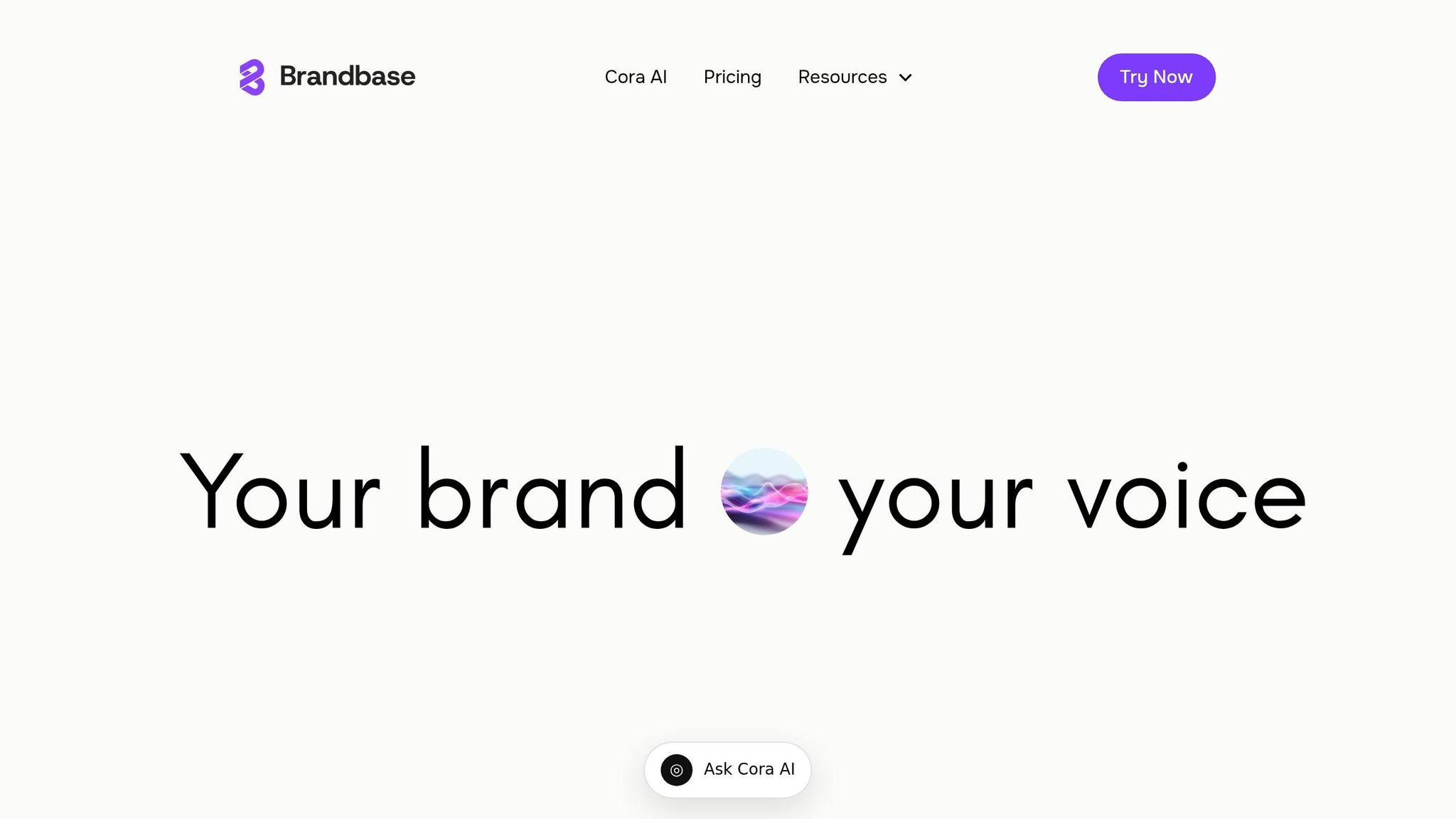
Brandbase starts with a 60-minute brand interview to capture your unique voice and expertise [28]. This conversation becomes the backbone of your digital presence, ensuring that everything from your landing page to your content feels authentic and genuinely reflects your expertise.
"We capture your expertise in 60 minutes, then build your landing page, secure press features, deploy your AI assistant, and launch LinkedIn campaigns."
– Brandbase [28]
After the interview, Brandbase creates a custom landing page tailored to your voice and positioning [28]. This isn’t just another generic template - it’s a high-converting website designed to showcase your authority effectively. They also deploy a custom AI assistant, Cora AI, trained specifically on your methods. This assistant can answer questions, qualify leads, and even book calls - 24/7 - allowing potential clients to interact with your expertise even when you’re unavailable [28].
Brandbase doesn’t stop there. For lead generation, they run personalized LinkedIn outreach campaigns to connect you with the right clients in your industry - no spam involved [28]. If you opt for the Pro plan, you’ll also receive 9 SEO-optimized blog posts per month and 6 PR placements per year (one every two months). This consistent mix of content and media exposure helps build your authority quickly. Many Brandbase users report seeing noticeable increases in visibility and qualified leads within the first three months [28].
But building authority is only half the battle. To sustain growth, you need to optimize your workflow.
Streamlining Your Workflow for Efficiency
Automation isn’t just about saving time - it’s about maintaining consistency, even when client demands ramp up. One way to stay ahead is through batch content creation. Devoting just two hours a week to creating content in bulk can eliminate the stress of scrambling for daily posts [21][29]. This strategy ensures you always have something ready to share, keeping your brand visible without last-minute panic.
Brandbase’s AI-driven lead qualification takes things a step further by filtering prospects before they even land on your calendar [12]. The AI assistant handles initial inquiries and only books calls with leads that meet your specific criteria. This means you can focus your time on meaningful conversations with qualified prospects.
"Authority shortens the sales cycle. When someone sees you as an expert, they stop questioning whether you can do the job."
– Botified.ai [12]
Step 7: Track Your Progress and Adjust Your Approach
Building authority isn't something you can set up once and forget about. The most effective consultants actively measure their progress and tweak their strategies based on real data. Without tracking, you're essentially guessing - and that can cost you both time and money. Tracking metrics ensures you're staying on course and allows you to refine your efforts to strengthen your online presence.
Key Metrics for Authority Building
Not all metrics are equally useful. While vanity metrics like follower counts might look good, they don't necessarily reflect trust or lead to business growth. Instead, focus on metrics that genuinely demonstrate your expertise and market influence.
- Visibility: Keep an eye on your LinkedIn profile views, aiming for at least 1,000 views per month [5]. Also, track direct traffic (people entering your URL directly) and branded search volume (how often your name is searched) [6].
- Engagement: Look beyond likes and focus on meaningful interactions. For instance, monitor "conversation depth" by analyzing thoughtful comments from peers [11]. Long-form LinkedIn articles tend to generate 2.3× more engagement [11]. Strive for an overall content engagement rate above 5% [5].
- Business Impact: Pay attention to the quality of inbound inquiries. Do potential clients reference your articles or frameworks? Track opportunities like speaking engagements or interview requests - strong personal brands often receive at least one invite per week [11]. By six months into a focused LinkedIn strategy, many consultants see 5–10 high-quality leads per month [24].
A clear sign of success is when prospects feel like they already know you before reaching out [6].
| Category | Key Metrics to Track | Target/Benchmark |
|---|---|---|
| Visibility | LinkedIn Profile Views | 1,000+ per month [5] |
| Engagement | Content Engagement Rate | >5% [5] |
| Lead Gen | Qualified Leads Generated | 3–10 per month [5][24] |
| Authority | Opportunity Flow | 1 invite/request per week [11] |
| Brand Strength | Direct Traffic | Growth in site visits [6] |
Refining Your Strategy Based on Results
Tracking metrics is only half the battle - you need to act on what the data tells you. Using the strategies outlined earlier, you can fine-tune your approach to improve authority and reach.
- Low visibility? Ramp up distribution efforts. Pitch guest articles to respected publications or engage more with industry influencers [6][7].
- Stagnant engagement? Your content might not stand out. Shift from general advice to more specific, original resources like case studies, frameworks, or anonymized client data [7][11]. For example, in 2023, a project manager shifted from posting generic productivity tips to creating Asana workflows tailored for remote legal teams. Within a year, this niche focus generated direct consulting inquiries [11].
- Inconsistent branding? Conduct quarterly audits of your digital presence. A lack of consistency can hurt your credibility [6].
- Refining your timeline: Use a 90-day plan. Spend the first month fixing foundational elements, the next two months building a content cluster, and then review metrics like branded searches and citations to plan your next steps [7].
- Lead quality matters: Identify "Green Flags" (like prospects with Director+ titles) and avoid "Red Flags" (such as requests for free advice). Calculate your ROI by comparing your time spent (usually 15–20 hours a month) with the value of new contracts. Many consultants achieve a 10–20× ROI from these efforts [24].
"Authority isn't fame – it's consistency and evidence."
– Claire Taylor, SEO Writer [7]
LinkedIn remains a powerful tool for consultants, with 77% reporting new projects from LinkedIn referrals [5]. Additionally, 75% of decision-makers say thought leadership has led them to research services they hadn't considered before [6]. Keep these trends in mind as you evaluate your metrics - and adjust your strategy accordingly.
Conclusion
Establishing authority as a consultant online isn’t about quick wins - it’s about consistently showcasing your expertise. Start by carving out a niche where you can directly address your ideal client’s challenges. Build a digital presence with a polished LinkedIn profile and website designed to draw in clients consistently [2][5]. From there, commit to producing thought-leadership content that highlights your knowledge and helps shape purchasing decisions.
LinkedIn referrals have consistently shown their value in landing high-ticket projects [5]. Dedicate 15–30 minutes daily to engaging with your professional community, and streamline your workflow by batch-creating content to prevent burnout. With only 3% of LinkedIn members posting more than once weekly, simply staying consistent can give you a significant edge [21].
Tools like Brandbase can help automate repetitive tasks, allowing you to focus on strategy and client relationships [30]. Solo entrepreneurs who invest just 45 minutes a day in brand-building see 4.2× more inbound leads over six months compared to relying only on paid ads [30].
Patience is key. It typically takes 3–6 months of steady effort to see meaningful results, and achieving full thought-leadership recognition often takes 1–3 years [3][21]. By sticking with these methods, you’ll strengthen your brand’s credibility and set the stage for long-term growth. Unlike paid ads, every piece of content you create contributes to your ongoing visibility [30].
"Authority isn't fame – it's consistency and evidence." – Claire Taylor, Co-founder, TU Marketing [7]
As paid advertising becomes less effective over time, your brand equity will continue to grow. Track your progress using the strategies mentioned above and refine your approach as needed. The consultants who build enduring authority aren’t necessarily the most skilled - they’re the ones who show up consistently.
FAQs
How do I choose a niche if I have no case studies yet?
If you don’t have case studies yet, start by leveraging AI tools to pinpoint market gaps, get to know your audience better, and fine-tune your niche. Focus on building trust by sharing meaningful insights through content creation. Platforms like LinkedIn are ideal for this - use them to engage with your audience and showcase your knowledge. By consistently publishing well-thought-out content, you can position yourself as an expert, draw in potential clients, and steadily work toward establishing tangible proof of your success.
What should I post on LinkedIn if I’m starting from zero?
To grow your presence effectively, start by sharing content that showcases your knowledge and offers practical value to your audience. Stick to your area of expertise - whether that's through sharing insights, case studies, or results that highlight your abilities. Clearly define the problem you address or the industry you specialize in, and make it a habit to create content centered on that focus.
Engage with others by leaving meaningful comments on their posts, sparking conversations, and building connections. Also, make sure your profile reflects your niche and expertise. Authenticity, clarity, and consistency are key to growing your audience naturally over time.
Which metrics actually prove my authority is growing?
Key indicators that your authority is on the rise include metrics like revenue per full-time employee (Rev/FTE), which provides insight into your business's overall performance and standing. Beyond financial metrics, keep an eye on your LinkedIn presence - this includes profile views, interactions with your content, and the inbound opportunities you attract.
Other signs of growing influence are client inquiries, inbound leads, and the expansion of your network through high-quality connections or followers. Together, these elements paint a clear picture of your increasing credibility and impact.
Related Blog Posts

Blog title heading will go here
Blog title heading will go here